
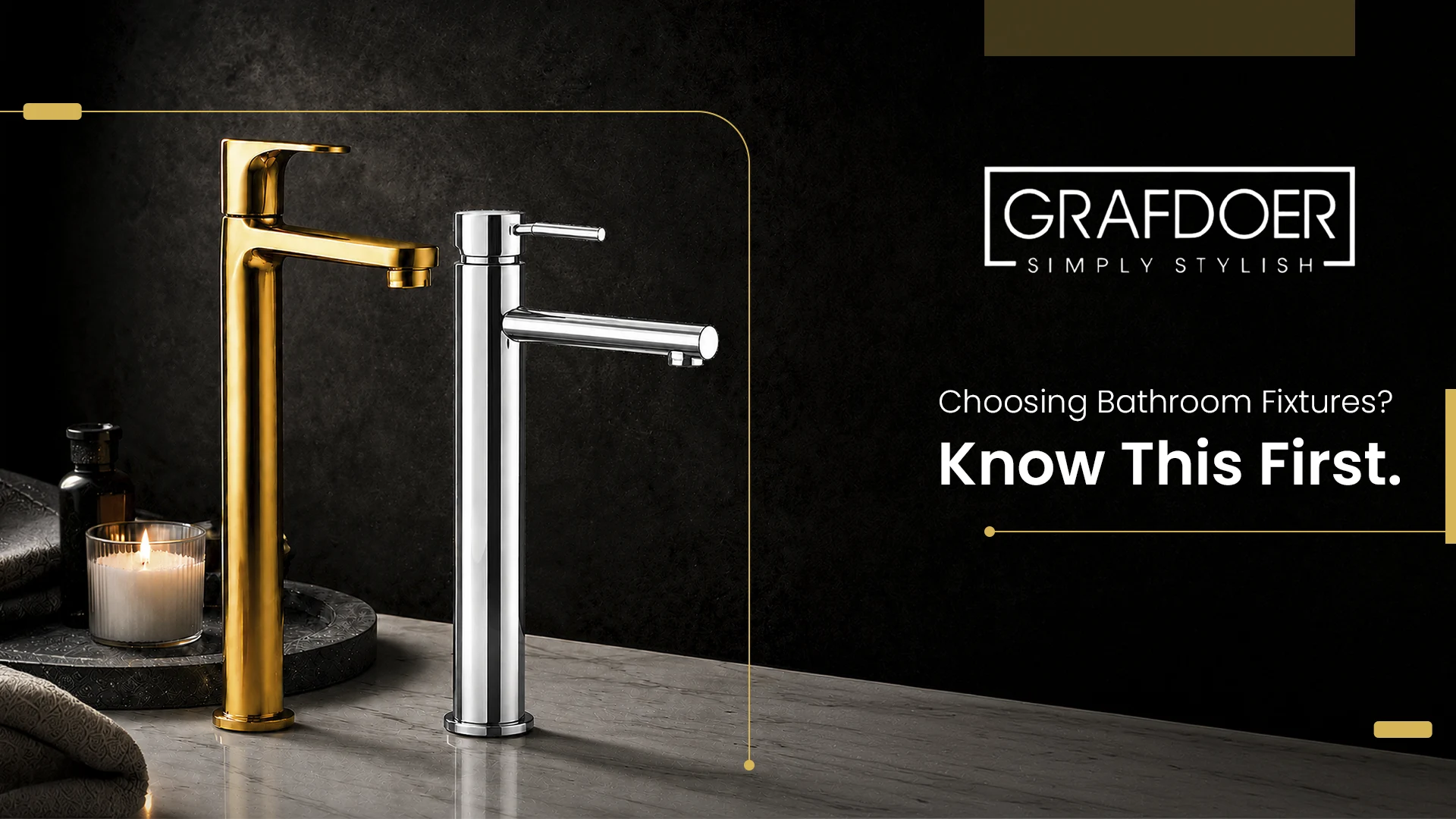
6 Bathroom Fitting Questions Every Homeowner Should Ask Before Renovating
Not all bathroom mistakes stand out right away. Some are surprisingly small
Like a faucet that’s too tall for the basin. A finish that’s harder to maintain than expected. Or a fitting that looked perfect in the showroom but feels uncomfortable to use every day.
And the frustrating part is that most of these problems could have been avoided with a simple question beforehand.
Let’s have a look at some answers that can help you make better decisions for your bathrooms:
1. Why Do Two Faucets That Look Similar Have a Big Price Difference?
Many times, two similar looking faucets can have a huge price difference. They have the same size and shape. The finish looks identical
The difference may not be visible to the eye, but the way they’re manufactured is completely different.
A high-quality faucet is made up of better materials. Like better-grade brass that has more thickness and durability. Whereas low-quality products are made with lighter materials and poor construction to reduce manufacturing costs.
This affects everything from strength and longevity to resistance against leaks and corrosion
The parts inside matter just as much. Every time you turn the handle on or off, components like cartridges and seals are doing the work. A quality cartridge can keep operating smoothly for years. But the cheaper ones start dripping, leaking, and make the handle feel stiff.
Good faucets are generally constructed by combining several layers of plating and surface treatment. These layers work together to make the finish less susceptible to scratches, moisture, water spots, fading and normal wear and tear.
With a new faucet, it’s hard to tell if the finish is of low quality. But it loses its appearance much faster with regular use. That makes two faucets that look similar on the outside have very different prices.
2. Can I Replace My Old Faucet Without Breaking Tiles?
A lot of homeowners worry that changing a faucet will mean breaking tiles and creating a mess. But that’s usually not necessary.
The old faucet can be easily removed and replaced without damaging the tiles, provided the new faucet is compatible with the existing piping.
Then again, each bathroom is unique. Some older plumbing systems might require additional work. Having a plumber inspect your system before you buy your new faucet is the most reliable solution.
3. Why Does Water Splash So Much in Some Basins?
When water splashes in basins, it is often assumed that it’s because of the water pressure.
But it happens when the faucet and basin are not a good match.
For example, if a tall faucet is used with a very shallow basin, the water will hit the surface with such force and splash back. Also, a poorly positioned spout may direct water toward the basin edge instead of the centre.
This is why selecting a faucet and basin separately can sometimes create problems. The most comfortable setups are designed as a combination, where height, reach, depth, and water flow all work together.
4. Do Expensive Bathroom Fittings Actually Save Water?
No. A higher price does not automatically mean lower water consumption.
A faucet may be priced higher if it is made from better materials, it has a more durable finish, and its internal mechanisms are of higher quality. Such features enhance the faucet’s functionality and durability; Still, they don’t necessarily lead to less water usage.
What helps you use water efficiently are things like an aerator and a flow regulator. They control how much water comes through and help reduce wastage while maintaining good pressure.
So if water conservation is important to you, don’t just look at premium products. Look for fittings specifically designed to manage water flow well.
5. Why Does Water Pressure Change Suddenly While Using the Shower?
Sudden pressure variations in the shower are almost always the result of the plumbing and not the shower fitting itself.
In many houses, different outlets share the same water supply. So if someone else opens the faucet or flushes the toilet in another part of the house while you’re having your shower, chances are you’re going to notice a difference in the flow.
This may cause the shower flow to become weaker or less consistent. But the right shower mixer can help reduce the impact.
High-quality mixers ensure a more stable flow as well as give a more satisfying shower experience.
If the pressure changes occur on a regular basis, it’s advisable to examine both the plumbing system and the shower fittings to determine the root of the cause.
The Right Bathroom Fittings Start with the Right Questions
Bathroom fittings are often overlooked as minor details, but they have a significant effect on a bathroom’s appearance and functionality.
Just understanding basic concepts helps you make wiser choices during installation, avoiding regrets later.
Because a good bathroom isn’t just one that looks beautiful. It’s one that still feels comfortable, practical, and easy to use long after the renovation is over.
-
 October 1, 2026
Types of Toilets: A Simple Guide to Choosing the Right One
-
September 30, 2026
Bathroom Fittings Buying Guide: What to Consider Before You Buy
-
September 22, 2026
Types of Wash Basins: How to Choose the Right Design for Your Bathroom


