Showing 17–17 of 17 results


Kitchen Faucets
Showing 17–17 of 17 results
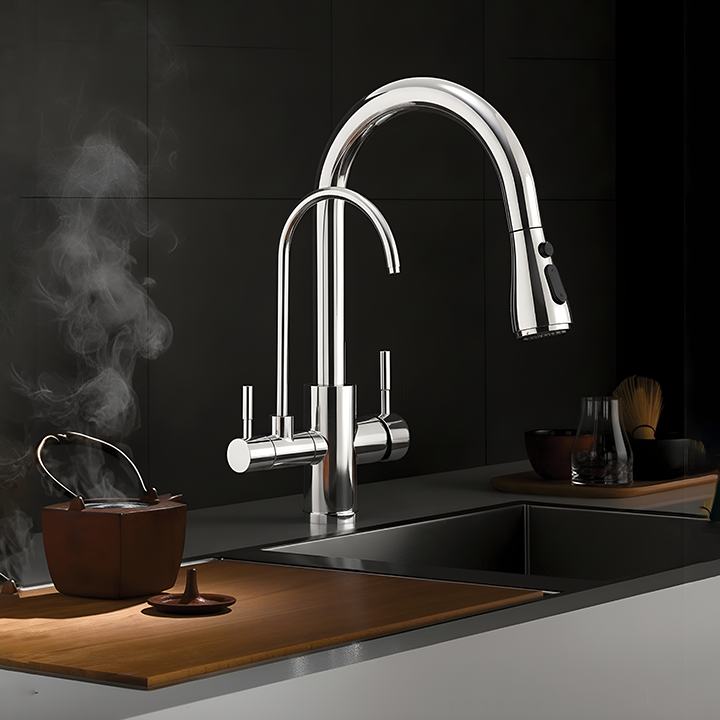
Recently Viewed Products
No recently viewed products to display
Kitchen Faucets: Types, Features & How to Choose the Right One
Picking a kitchen faucet feels simple - until you actually start shopping. Suddenly you're staring at pull-down sprayers, wall mount kitchen faucet options, matte black finishes, and a dozen features you didn't know you needed to think about. The truth is, your kitchen faucet works harder than almost any other fixture in your home. It gets turned on and off dozens of times a day, so functionality, design, and durability all need to earn their place. Whether you're drawn to a sleek modern kitchen faucet, a space-saving wall-mounted style, or simply want something that won't wear out in two years, this guide breaks down what to actually look for - including where a kitchen sink faucet like Grafdoer fits into the picture.What Is a Kitchen Faucet?
A kitchen faucet is the fixture mounted at your sink that controls water flow - turning it on, off, and mixing hot and cold to the temperature you want. People often use "kitchen faucet" and "kitchen tap" interchangeably, and for the most part, that's fine; "faucet" is more common in North America, while "tap" is the go-to term in the UK and other regions, but they describe the same kitchen sink water faucet.Under the surface, a kitchen tap faucet works through a valve system (usually ceramic disc these days) that regulates water pressure and temperature as you move the handle. Most modern kitchen water taps use a single lever for both hot and cold, though separate controls still exist. One detail people overlook: faucet size and hole configuration need to match your sink. A faucet with the wrong base diameter or reach can leave gaps, splash zones, or simply not fit - so measuring your sink's existing setup before you fall in love with a design is always step one.Types of Kitchen Faucets
Wall Mount Kitchen Faucet
A wall mount kitchen faucet attaches directly to the wall above the sink instead of the countertop or sink deck. This frees up counter space, makes cleaning around the sink much easier (no base to scrub around), and tends to give kitchens a cleaner, more architectural look. Wall-mounted kitchen taps work especially well with vessel sinks, farmhouse sinks, or any setup where a deck-mounted faucet would look bulky. The trade-off is installation: wall mount kitchen faucet plumbing needs to be roughed in during construction or renovation, so it's a bigger commitment than swapping out a countertop faucet - worth planning early if you're remodeling.Pull-Down and Pull-Out Faucets
Both styles let you detach the spray head from the faucet body for extra reach and flexibility. The difference is direction: pull-down faucets have a taller arc and the head pulls straight down into the sink, which is great for filling tall pots and rinsing produce. Pull-out faucets sit lower and the head extends outward toward you, which some people find easier for washing dishes at an angle. Both usually offer a toggle between a steady stream and a spray pattern.Single-Handle and Two-Handle Faucets
Single-handle faucets control temperature and flow with one lever - quick, intuitive, and easy to operate one-handed, which matters when your other hand is covered in dish soap. Two-handle faucets, with separate hot and cold controls, offer more precise temperature dialing and often lean into a more traditional or classic aesthetic. Neither is objectively better; it comes down to how much precision versus convenience you want at the sink.Modern Kitchen Faucets: Features & Design
A modern kitchen faucet is defined less by a single look and more by a philosophy: clean lines, minimal ornamentation, and function built into the form. High-arc, gently curved spouts are a hallmark - they give more clearance under the faucet while still looking sculptural rather than industrial. Full 360° swivel is close to standard now on any contemporary kitchen tap, letting the spout rotate to reach both sink basins or a nearby pot filler position.Flexible, magnetic-docking spray heads have also become a defining feature of stylish kitchen faucets, since they combine the practicality of a pull-down sprayer with a silhouette that doesn't look cluttered. Finish-wise, modern and minimalist kitchen faucets tend to favor matte and brushed textures over high-shine chrome - they hide water spots better and read as more current. The best approach is matching your faucet's finish and shape to your existing hardware, cabinetry, and lighting fixtures so the kitchen feels considered rather than assembled piece by piece.Why Choose a Black Kitchen Faucet?
A black kitchen faucet has become one of the most requested upgrades in kitchen design, and it's easy to see why - it adds contrast and a sense of intention to a space that might otherwise be dominated by neutral counters and cabinets. Matte black kitchen faucets are the more popular choice over glossy black, mainly because matte finishes resist fingerprints and water spots far better, which matters a lot at a fixture that gets touched constantly with wet hands.A modern black kitchen faucet works with a wider range of kitchen styles than people expect - it pairs naturally with stainless steel appliances, softens a stark white kitchen, and adds real depth against dark or navy cabinetry. Against a white or light-colored sink, a black kitchen sink faucet becomes a genuine focal point rather than just a fixture. Maintenance is straightforward: a soft cloth and mild soap keep the finish looking sharp, though it's worth avoiding abrasive cleaners that can dull the matte coating over time.Key Features to Look for in a Kitchen Faucet
Beyond looks, a handful of features separate a faucet that lasts from one that doesn't:- High-quality materials like solid brass construction hold up far better than cheaper zinc alloy bodies.
- Reliable hot and cold water control, ideally through a ceramic disc valve for smooth, drip-free operation.
- 360° swivel for full reach across a double basin or wide sink.
- A pull-out or pull-down spray with at least two functions - stream and spray - for everyday versatility.
- Straightforward installation, ideally a design that doesn't require specialty tools or a plumber for a standard swap.
- Easy cleaning, meaning a finish that resists mineral buildup and smudging.
- A water-saving aerator, which cuts water use without sacrificing pressure.
- A durable, corrosion-resistant finish that won't flake, tarnish, or fade with daily use.
- Leak-resistant construction, particularly at the base and hose connections, where most long-term failures happen.
Kitchen Faucet Materials & Finishes
The base material and surface finish both affect how a faucet performs and ages:- Stainless steel resists corrosion and fingerprints well and suits most modern kitchens.
- Brass (often used as the internal body even under other finishes) is prized for durability and is a mark of higher-quality construction.
- Chrome is affordable, easy to clean, and timeless, though it shows water spots more visibly.
- Brushed nickel offers a warmer, softer alternative to chrome with excellent smudge resistance.
- Matte black brings contrast and a contemporary edge, with strong resistance to visible fingerprints.
- Gold and brushed gold finishes add a luxe, statement-making look, best suited to kitchens with warmer color palettes.
Kitchen Faucet Price: What Should You Expect to Pay?
Kitchen faucet price depends on a mix of factors, and understanding them makes it easier to judge whether a faucet is genuinely good value or just cheap. The base material plays the biggest role - solid brass construction naturally costs more to produce than lightweight zinc alloy, but it also lasts far longer. Included features add up too: pull-down or pull-out sprayers, multiple spray settings, and touchless or sensor-based operation all push the cost higher than a basic single-function faucet. Brand reputation, finish type, and installation complexity (a wall mount kitchen faucet, for instance, involves more work than a standard deck-mounted swap) also factor into where a faucet lands.It's worth resisting the urge to chase the cheapest kitchen tap you can find. Budget faucets often use thinner materials and weaker valves, which tends to mean more frequent leaks, drips, and early replacements - costing more in the long run than a well-built faucet from the start. The smarter approach is comparing what's actually inside the faucet - the valve, the body material, the warranty - rather than comparing price tags alone.Why Consider a Grafdoer Kitchen Faucet?
Grafdoer kitchen faucets are built around that same balance of design and durability, backed by real manufacturing experience rather than just a catalog of designs. Here's what stands out:- Wide style range - wall-mounted, black, and modern finishes covering everyone from minimalists to anyone wanting a bold contemporary look.
- Everyday-ready features - smooth 360° swivel and pull-down or pull-out spray functionality built into most models.
- Solid, leak-resistant construction designed to hold up to daily kitchen use.
- Two dedicated manufacturing plants - one in Morbi and another in Bhiwadi, two of the country's established hubs for faucet and sanitaryware production.
- In-house quality control across both locations, from casting and plating to final assembly, rather than relying on third-party or unverified sourcing.
- First-party manufacturing accountability - giving buyers real confidence that what they're installing is backed by an actual, traceable production process, not just a design on a listing page.
How to Choose the Right Kitchen Faucet
Use this quick checklist before you buy:- Check sink compatibility - confirm hole count and spacing match the faucet base.
- Choose the right mounting type - deck-mounted or wall mount kitchen faucet, based on your sink and counter setup.
- Select the faucet style - pull-down, pull-out, single-handle, or two-handle.
- Consider spout height and reach - make sure it clears tall pots and reaches your full sink basin.
- Decide on handle configuration - one lever for convenience, two for precise control.
- Choose the right finish - one that matches your hardware and suits your maintenance habits.
- Compare features and build quality - prioritize materials and valve quality over add-ons you won't use.
- Factor in installation and maintenance - pick a faucet you can realistically install and keep clean long-term.