
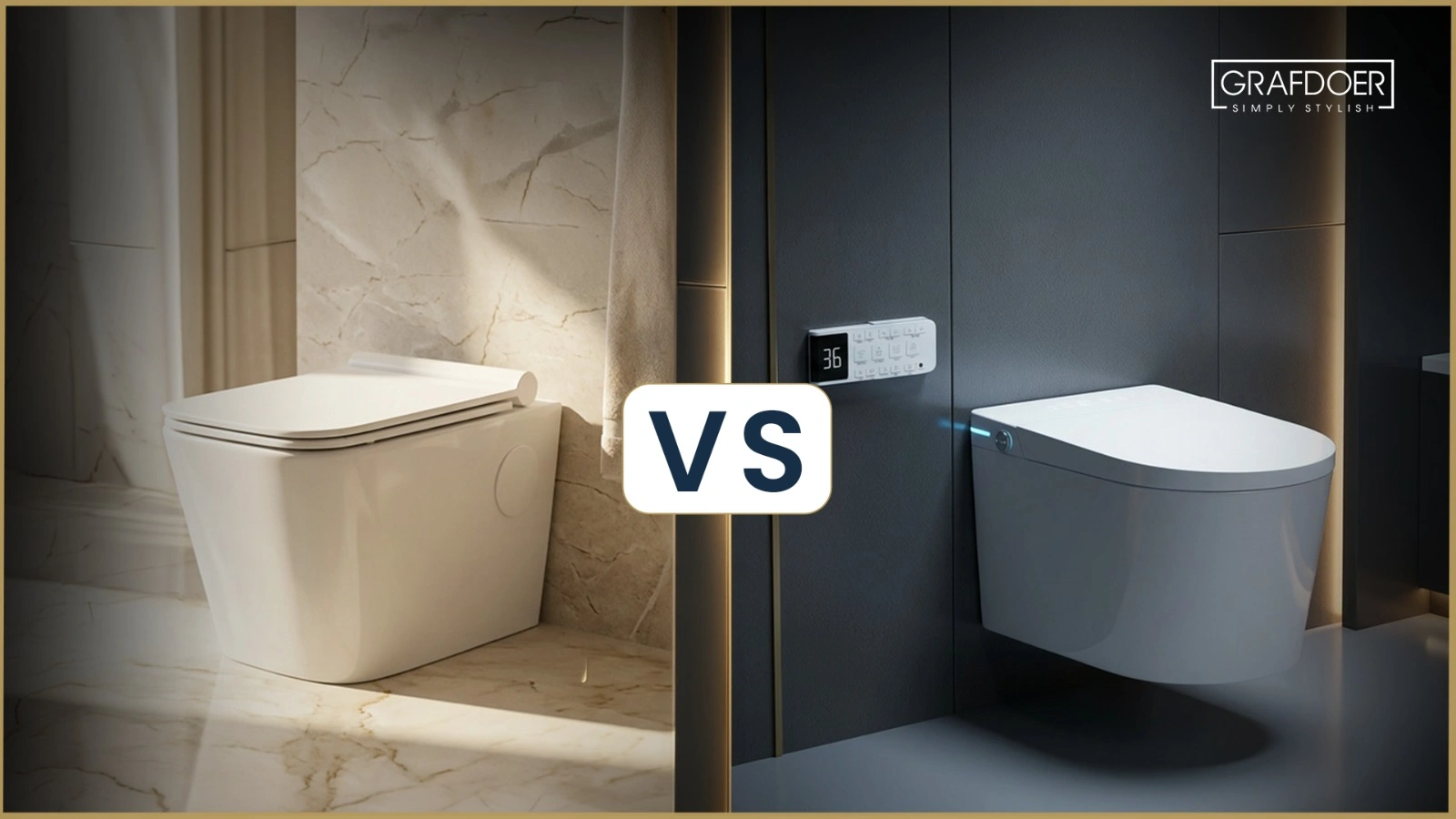
Smart Toilet vs Traditional Toilet: Finding the Right Fit for Your Bathroom Routine
Most people never think deeply about toilets while designing a bathroom. The attention usually goes somewhere else first. Tiles that look expensive. Lighting near the mirror. Maybe a rainfall shower if the space allows for it. As long as the toilet worked properly and lasted for years without trouble, that felt completely sufficient for most households.
That mindset has slowly started changing.
People notice comfort more now. They notice hygiene. They notice if something feels annoying to clean every single day. Even small details matter once they become part of daily life. That’s one of the biggest reasons smart toilets have started getting so much attention in modern homes lately.
Choosing between a smart toilet vs traditional toilet usually comes down to lifestyle. Daily habits matter. Comfort preferences matter. Maintenance expectations matter too. Even the kind of experience someone wants from their home plays a role in deciding which option feels right in the long run.
What Is a Smart Toilet?
A smart toilet combines traditional toilet functionality with features designed to improve comfort, hygiene, and convenience during daily use. Depending on the model, smart toilet features can include bidet cleansing, heated seats, automatic flushing, self-cleaning nozzles, deodorizing systems, sensor-based lid operation, and adjustable water settings.
These may sound like unnecessary technical additions. But it creates a world of difference in everyday routine. A warm seat during winter mornings. Automatic flushing when hands are occupied. Adjustable water settings that create a cleaner and more comfortable experience without much effort. These things seem minor initially. Over time, they stop feeling like features and simply start feeling normal.
That’s usually when people begin understanding the appeal of smart bathroom technology.
Benefits of Smart Toilets
1. Better Hygiene
One of the biggest reasons people switch to smart toilets is hygiene. Water-based cleansing simply feels fresher during daily use. And after some time, many people start realizing how much traditional bathroom habits were followed mostly because that’s just how things had always been done. Not necessarily because they were the most comfortable or hygienic option available.
Features like touchless flushing and self-cleaning nozzles also reduce how often people need to touch bathroom surfaces constantly.
2. Greater Comfort in Daily Use
Comfort is where smart toilets win people over.
Usually it starts with one small thing. Someone experiences a heated seat during winter and suddenly regular toilet seats start feeling unnecessarily cold afterward. Then there’s warm water cleansing late at night or during rushed mornings when everything feels slightly easier and more comfortable without needing extra effort.
3. Better Accessibility for Elderly Users
Smart toilets can make daily bathroom use easier for elderly individuals or users with mobility concerns. Features like automatic flushing, bidet cleansing, and simpler controls reduce physical effort during use. That added convenience often improves comfort and independence in ways that become meaningful over time.
4. Improved Water Efficiency
Many modern smart toilets use more controlled flushing systems designed to reduce unnecessary water usage while still maintaining strong performance.
The goal is not simply using less water. It is using water more intelligently. For homeowners trying to build more efficient and sustainable spaces, that becomes an important advantage over time.
5. Cleaner Bathroom Environment
The bathroom is considered cleaner in general when there are not many points of contact, and there is no continuous maintenance required. For example, there are deodorisation, automatic flush mechanisms, and even self-cleaning functions that help reduce buildup, odours, and everyday upkeep. The difference can be felt in the overall experience.
6. Personalized Bathroom Experience
Not everyone prefers the same water pressure, seat temperature, or cleansing settings during use.
Smart toilets allow users to adjust these details according to personal comfort preferences rather than forcing the exact same experience for everybody. Some people prefer warmer settings. Some want gentler water pressure. Others prioritize stronger cleansing functions.
Once people become used to that level of customization, traditional setups can start feeling surprisingly limited afterward.
7. Modern Bathroom Design
Smart toilets naturally work well in modern bathroom spaces focused on cleaner lines, minimal design, and visual simplicity.
Their integrated appearance makes bathrooms feel more organized and less cluttered. It offers ease, comfort, and functionality rather than decoration alone.
Are Smart Toilets Worth the Price?
For some homeowners, smart toilets genuinely improve the bathroom experience enough to justify the investment. A smart toilet may suit homeowners who prioritize comfort, hygiene, convenience, accessibility, and modern bathroom design in their daily routine.
At the same time, traditional toilets still make more sense for many households.
They’re simpler. Easier to maintain long term. More affordable during installation and repairs. They also work independently without electricity, which many homeowners still strongly prefer for practical reasons.
Because not everybody wants technology involved in every single part of the house. That preference is completely valid too.
The real value depends on how much those everyday improvements matter within a person’s routine because small conveniences tend to feel much bigger when experienced consistently over the years.
Explore Smart Bathroom Innovation with Grafdoer
Modern bathrooms are becoming more thoughtful in the way they balance comfort, hygiene, usability, and design. Grafdoer brings that same approach to its bathroom solutions with products designed for modern living, long-term performance, and everyday ease.
-
 September 15, 2026
Design That Performs: The Engineering Behind Better Bathroom Fittings
-
-
August 22, 2026
How to Choose the Best Diverter Brand in India for Your Bathroom


