
Design Anatomy of Bathroom Fittings: Parts and Functions Explained
Table Of Content
Table of Contents
When you buy a bathroom fitting, you usually look at the things you can see.
The finish. The shape. The size. Maybe the brand.
But some of the biggest differences are hidden inside the product. A faucet can look great but develop a drip. A shower can have a beautiful design but give you uneven water coverage. A toilet can look almost identical to another one but flush very differently.
So, what is actually happening inside these fittings?
Let’s break it down without getting too technical.
What’s Inside a Bathroom Faucet?
While a faucet appears rather simple from the outside, it contains numerous little components that all work in harmony every time you turn it on.
Ceramic disc cartridge: This is the main component that controls the water. It allows you to fine-tune the water level and smoothly mix hot and cold water.
Aerator: This is the small piece at the end of the faucet. It mixes air into the water and helps give you a smoother flow with less splashing.
Spout: The shape of the spout decides where the water lands in your basin. Its height, length, and curve need to work with the basin. If they don’t, you can end up with water bouncing off the basin and onto the counter.
Seals: These small components keep water from escaping through the joints and moving parts.
Brass body: This is the main structure of the faucet. Brass gives it strength and helps it handle regular exposure to water.
The point is simple. A faucet isn’t just about the outside design. The parts inside have a lot to do with how smoothly it works.
What’s Inside a Modern Toilet?
The toilet has to fulfill two major functions: flushing waste effectively and preventing undesirable odors from coming in.
There are several crucial components that make these functions possible.
Flushing system: This controls how water moves through the toilet and carries waste away. Different flushing systems use different water-flow methods.
Glazed trapway: This is the passage through which waste leaves the toilet. The smooth interior surface of the trapway allows waste to pass smoothly.
Rim or rimless design: This influences the movement of the water around the bowl during a flush. In addition, an effectively designed rimless toilet is easier to clean.
Dual-flush mechanism: You get two flushing options. The smaller flush uses less water, while the larger one provides more water when needed.
Trap seal: A certain amount of water gets left behind after flushing. So a trap seal creates a barrier that helps keep sewer smells from coming back into the bathroom.
These parts may appear insignificant both while making a purchase decision or during the installation of the toilet. But malfunctioning in one of them can really turn your everyday bathroom routine into a major hassle and source of frustration.
What’s Inside a Shower?
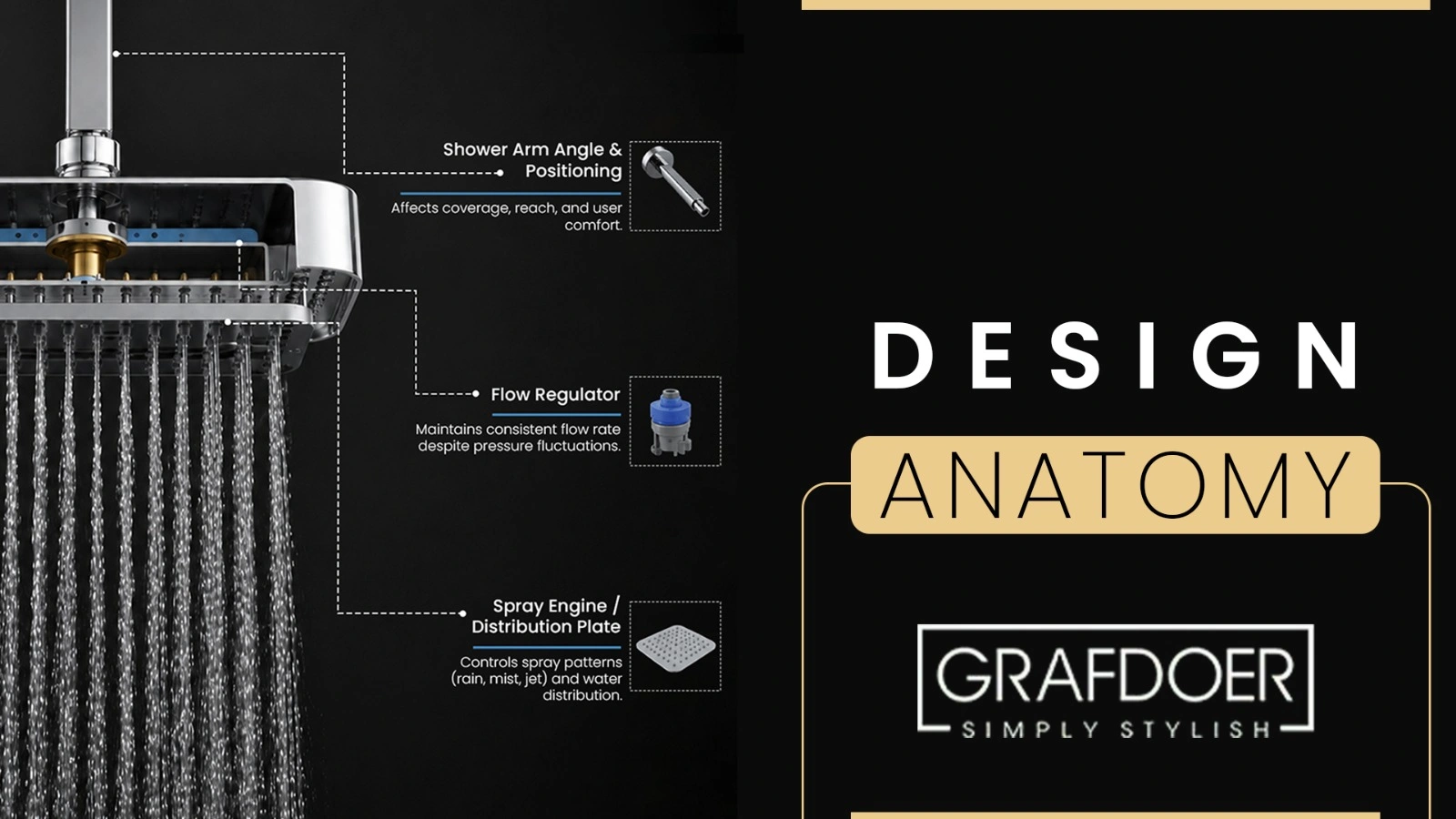
Know that two showerheads can look similar but feel completely different when you turn them on. A lot of that comes down to what happens inside. Let’s understand the mechanisms of a shower:
Flow regulator: This is responsible for regulating the amount of water coming through the shower and also for maintaining a smooth and consistent flow.
Shower nozzles: These small openings control how the water comes out. Their size and arrangement affect how soft, strong, or wide the spray feels.
Anti-clog silicone jets: These help prevent mineral buildup from blocking the small water outlets.
They’re particularly useful in areas with hard water.
Spray plate: It controls how the water is dispersed throughout the showerhead, allowing for rain or jet showers.
Temperature control valve: It stabilizes the water temperature. This reduces sudden changes between hot and cold.
Shower arm: This holds the showerhead in place. Its height and angle affect where the water falls and how much area the shower covers.
So if one shower feels much better than another, don’t blame the water pressure straight away. The shower itself may be making a big difference.
What’s Inside a Diverter?
A diverter becomes useful when you have more than one shower outlet.
Say you have an overhead shower and a hand shower. You need a way to choose between them.
That’s the diverter’s job. A diverter is made up of these components:
Diverter cartridge: This sends water to the outlet you choose.
Internal channels: These guide the water towards the right outlet inside the fitting.
Seals: These stop water from leaking between the different outlets.
Handle or knob: This lets you switch between outlets. A good mechanism should feel smooth and easy to operate.
You shouldn’t need to think about any of this while taking a shower. You turn the knob, choose your outlet, and the water goes where it should.
Why the Internal Design Matters
A bathroom fitting has to do more than look good. Its internal components influence water flow, temperature control, leakage, flushing performance, spray coverage, and everyday operation.
Understanding these basics gives you a better way to compare products. You can look beyond appearance and consider how the fitting is actually built and how it is likely to perform over time.
Grafdoer designs bathroom fittings with attention to both internal functionality and external design, offering products made for reliable everyday use.
Recent Articles
 How to Choose the Right Sanitaryware Brand for Your Dealership: A Complete Guide
- How to Choose Bathroom Fixtures for a New Home: A Complete Guide
- Types of Toilets: A Simple Guide to Choosing the Right One
- Bathroom Fittings Buying Guide: What to Consider Before You Buy
- Types of Wash Basins: How to Choose the Right Design for Your Bathroom