
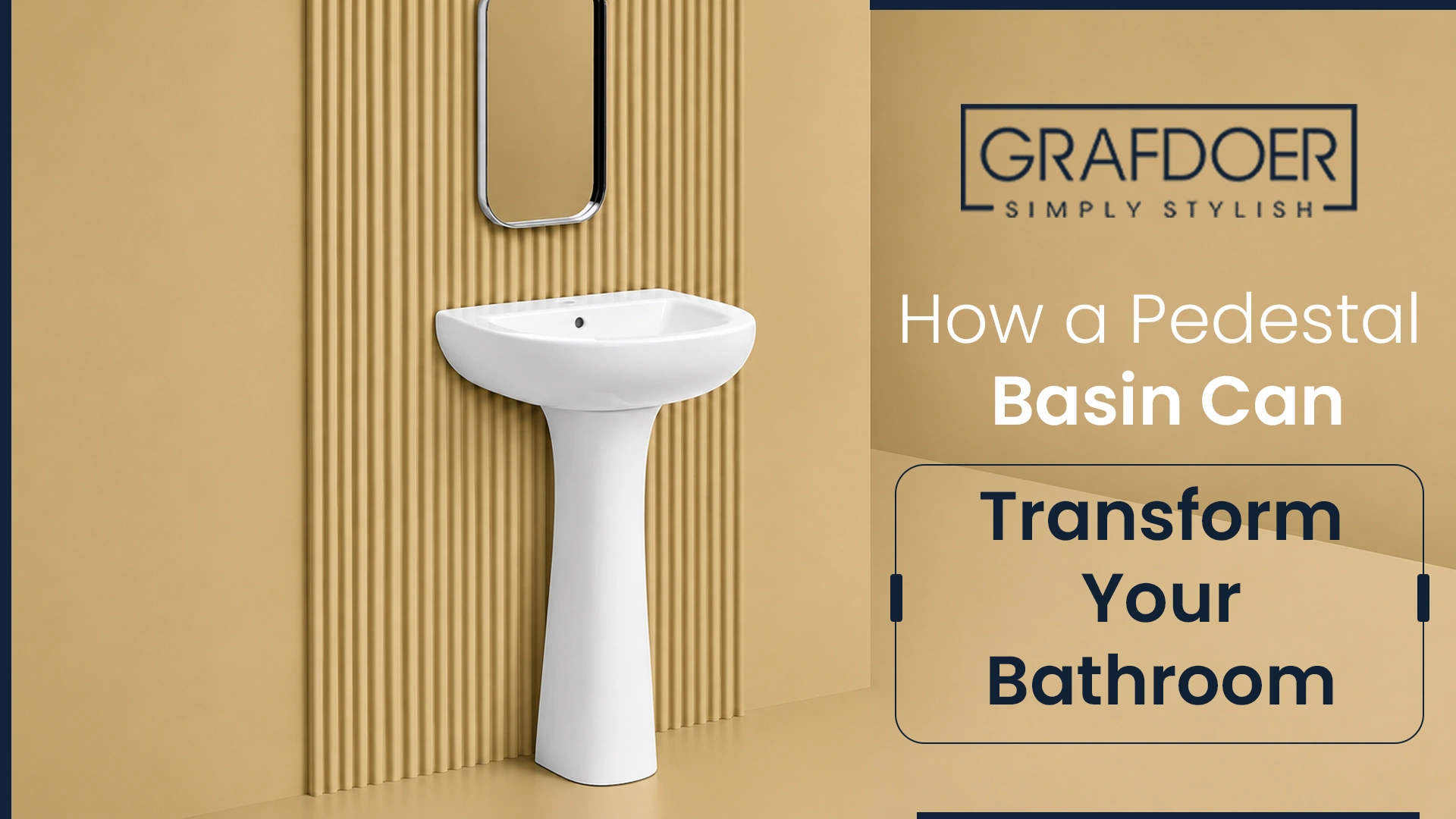
How a Pedestal Basin Can Transform Your Bathroom
Table Of Content
Table of Contents
The washbasin area can influence how spacious and organised a bathroom feels. While a vanity offers valuable storage space, it’s not always essential, particularly in a smaller bathroom or guest washroom. A pedestal basin takes a different approach. Because a pedestal basin is free-standing, it maintains a minimalist look while hiding the pipework below the basin.
But is a pedestal basin the right fit for your bathroom? From its space-saving design to the practical details of installation, here are the benefits worth considering before making a choice.
What Is a Pedestal Basin?
A pedestal basin is composed of a basin with a supporting column beneath it. The column, or pedestal supports the basin, and conceals the pipework and other plumbing fixtures that might otherwise be seen, giving a neat appearance.
Unlike a countertop basin, it doesn’t need a separate surface for installation. It also differs from a vanity basin, which is generally fitted above or into a cabinet that provides storage underneath.
Two of the most common designs for pedestal basins are:
Full-pedestal basin
A full pedestal basin, as the name implies, is a basin with a pedestal that extends right to the floor providing support for the basin and also conceals the plumbing.
Half-pedestal basin
The shorter pedestal is fixed beneath a wall-mounted basin and ends above the floor. It conceals the plumbing while leaving the floor below open.
Both are a tidy, minimalist alternative to vanity units. Grafdoer has separate collections for pedestal and half-pedestal wash basins.
What Are the Benefits of Installing a Pedestal Basin?
1. Saves Space in the Bathroom
The basin doesn’t come with a vanity or storage unit beneath it, so it occupies a much smaller footprint.
This allows you to move around it with ease, which can be very beneficial for smaller bathrooms and powder rooms.
2. Creates a Clean and Uncluttered Appearance
If the basin’s pipework and drainage fittings are left exposed, it looks untidy. A pedestal will hide these, providing a neater appearance for your basin.
And, the simple and self-contained style lends your washbasin area a clean look, making it suitable for a bathroom in which you don’t want many fittings or decorative ornaments.
3. Makes Bathroom Floor Cleaning Easier
If you opt for a basin with a vanity unit, cleaning can be quite a chore, especially at the base where it meets the floor. But a basin with a pedestal doesn’t take up the same amount of floor space. You also don’t have to worry about the grime and dust that can accumulate along the edges of vanity cabinets.
With a half pedestal, you can access the floor under your basin, so it’s easy to mop and sweep.
Although a full pedestal does occupy space, you won’t have the bigger footprint of a vanity unit, meaning you can clean the area without stooping around a unit or furniture legs.
4. Offers versatility in your bathroom designs:
These basins come in several styles starting with the rounded bowls and curved bases to modernistic and sharp edged looks. Hence, it becomes very convenient for people to get a pedestal basin that complements other pieces inside their bathroom.
5. Provides a Practical Washbasin Setup
There might be many cases where you don’t need much storage capacity right under the washbasin. That is exactly the reason why people usually go for a pedestal basin because they only require sufficient area to perform basic functions like washing hands and nothing else. So, these types of basins prove to be great choices for guest bathrooms as well as small-sized wash areas.
What Should You Consider Before Choosing a Pedestal Basin?
Before getting a pedestal basin, these measurements and installation details must be kept in mind :
Available space and dimensions: Measure the space available and check the basin’s width and depth. Make sure it won’t obstruct movement or nearby fittings.
Basin height: Choose a height that feels comfortable for everyday use.
Faucet compatibility: Check whether the basin has a single tap hole, multiple tap holes or no provision for a deck-mounted faucet. The faucet design and mounting arrangement must match the basin.
Plumbing connections: Check the position of the water supply and drainage outlets. Their placement should align with the basin and pedestal to avoid installation difficulties.
Material and finish: Look for an easy to clean, smooth surface. For washbasins ceramic is a usual choice as its surface is non porous and suitable for regular bathroom use.
Installation requirements: The basin needs to be positioned and secured correctly. Depending on the model, it may require wall support in addition to the pedestal. Make sure these considerations have been made before the tiling and plumbing work in the bathroom is finalized.
Is a Pedestal Basin the Right Choice for Your Bathroom?
If you don’t want a basin with a vanity unit or countertop, a pedestal basin is a sensible option.
Concealing all the plumbing and taking up relatively little space, these basins make a great freestanding addition to any bathroom.
And if you go for a half pedestal style, you’ll leave your bathroom’s floor underneath unobstructed and easy to clean.
On the flip side, unlike the vanity units, there won’t be cabinets or surface area with these basins to store your bathroom essentials.
For those who don’t have issues with lack of storage space, this pedestal basin provides you with a stylish and effective wash basin.
Grafdoer has a range of beautiful designs of pedestal basins for various bathrooms’ layout & preferences. Check out our collection and find out the one that fits your bathroom design.
Recent Articles
 How to Choose the Right Bathroom Faucet for Your Wash Basin
- Design Anatomy of Bathroom Fittings: Parts and Functions Explained
- How to Choose the Right Sanitaryware Brand for Your Dealership: A Complete Guide
- How to Choose Bathroom Fixtures for a New Home: A Complete Guide
- Types of Toilets: A Simple Guide to Choosing the Right One