
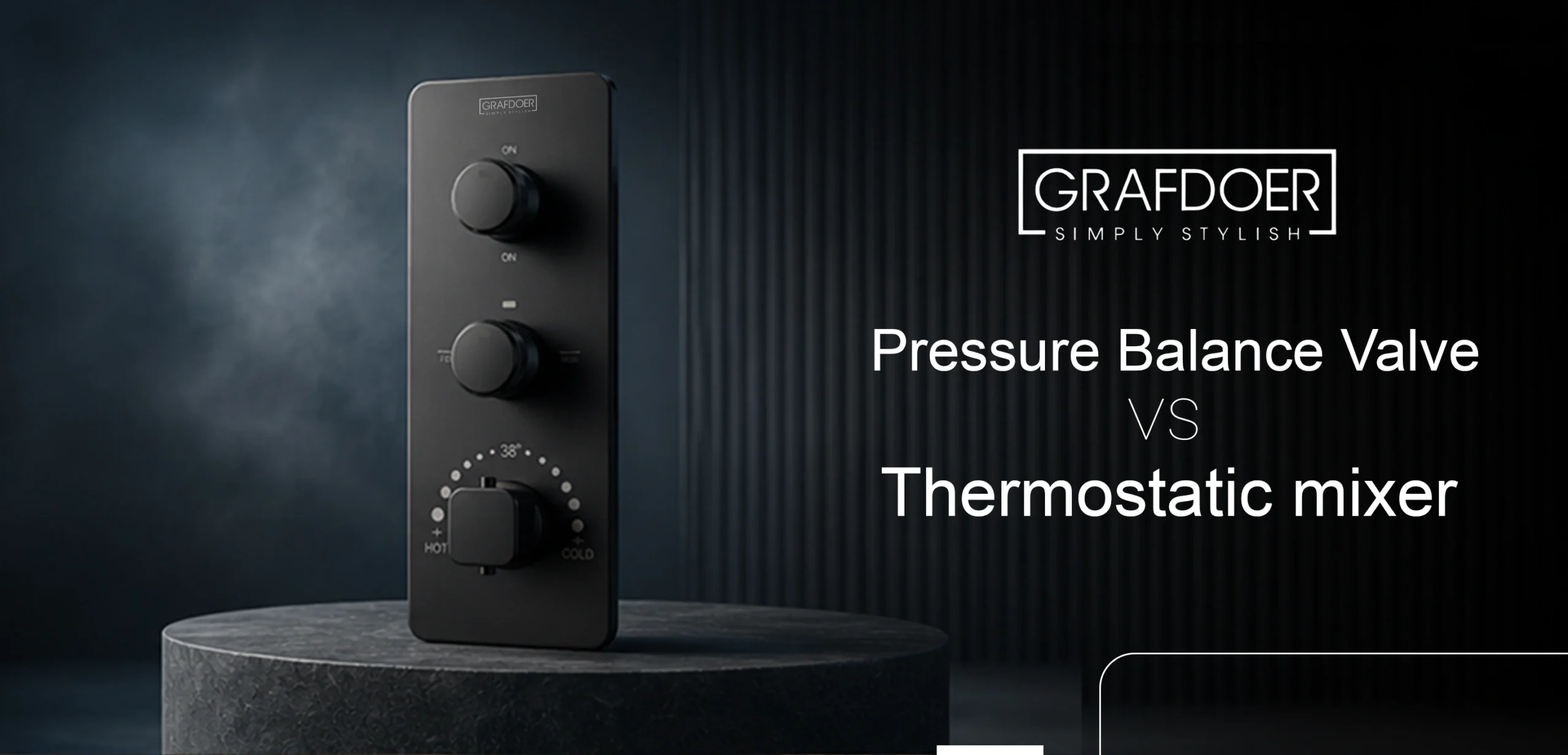
Thermostatic Mixer vs Pressure Balance Valve: Which One Is Better for Your Shower?
Most people don’t think much about water control systems until they actually live with them every day. They focus on the visible things first, like tiles, lighting, shower heads and finishes. The valve sits hidden behind the wall, so it rarely feels like a major decision.
Until one day the shower starts annoying you. You’re standing there half awake in the morning and suddenly the water goes freezing cold because someone opened the kitchen tap downstairs. A few seconds later it becomes too hot. You adjust it again and again. It feels like an insignificant thing. But after months of dealing with it every day, it becomes frustrating.
To solve these issues, you may come across terms like pressure balance valve and thermostatic mixer during renovations. And at first, they sound almost identical. But they’re not.
Both systems improve shower comfort and safety. But the way they do it is completely different. Let’s explore the difference between the two and which one is the right choice for your bathroom.
What Is a Pressure Balance Valve?
A pressure balance valve helps reduce sudden temperature changes caused by fluctuations in water pressure. Let’s take an example: You’re taking a shower peacefully. Someone flushes a toilet somewhere else in the house. The water pressure changes inside either the hot or cold water line immediately. That sudden imbalance can make the shower temperature jump very quickly. Nobody enjoys that surprise.
A pressure balance valve reacts to those pressure changes and adjusts the flow to reduce extreme temperature swings. That’s why these valves are commonly used as anti-scald protection in residential bathrooms.
They make showers feel safer and more controlled compared to older manual valve setups. But there’s something important many homeowners misunderstand.
A pressure balance valve does not maintain an exact water temperature throughout the shower. It reacts to pressure imbalance. So while it prevents dramatic shifts, smaller fluctuations can still happen during use. For many homes, though, that works perfectly well. It’s ideal if you prefer something practical, reliable, and straightforward without needing highly precise temperature control.
What Is a Thermostatic Mixer
A thermostatic mixer focuses directly on maintaining water temperature.
The system continuously monitors the temperature and automatically adjusts the hot and cold water mix internally to keep the shower stable.
What this means for you is a much smoother experience during daily use.
If someone uses another tap elsewhere in the house, the thermostatic mixer compensates automatically in the background. You don’t keep reaching for the handle every few minutes because the system is already managing those fluctuations for you.
Personally, this is where thermostatic systems start feeling noticeably different. The shower feels calmer. More controlled. Especially during longer showers where even small temperature shifts become annoying over time.
This is one of the reasons thermostatic mixers are often preferred in modern and premium bathrooms. The experience feels calmer somehow. Less interrupted. More controlled without needing effort from the user.
Thermostatic Mixer vs Pressure Balance Valve: What’s the Real Difference?
Which One Controls Temperature Better? Thermostatic Mixer or Pressure Balance Valve?
Pressure balance valves protect you from sudden temperature shocks.
Thermostatic mixers try to maintain a consistent shower experience from beginning to end.
Both improve comfort. But the level of control feels very different once you actually start using them everyday.
Thermostatic Mixer vs Pressure Balance Valve: Which One Works Better in Homes With Multiple Bathrooms?
If your home regularly has multiple taps, showers, or appliances running at the same time, thermostatic mixers usually perform better.
Pressure balance valves react after pressure changes happen. Thermostatic mixers continuously compensate while those changes are happening elsewhere in the house.
The result feels smoother during busy morning routines when several water outlets are being used together.
Thermostatic Mixer vs Pressure Balance Valve: Which One Is Safer for Families?
Both systems improve shower safety significantly compared to basic manual valves.
Pressure balance valves reduce sudden bursts of extremely hot or cold water caused by pressure imbalance. Thermostatic mixers add another layer of protection by maintaining more controlled temperature stability throughout the shower. Many systems also include maximum temperature limit settings for added safety.
For homes with children or elderly family members, that consistency becomes very valuable over time.
Which One Feels More Comfortable During Daily Use? Thermostatic Mixer or Pressure Balance Valve?
Comfort usually comes down to consistency.
Pressure balance valves improve stability and basic functionality. Thermostatic mixers create a smoother experience because the water temperature stays steady without constant adjustment.
It’s not a dramatic difference during the first minute of use. But over weeks and months, you start noticing how uninterrupted the shower feels. And that daily comfort matters more than most homeowners expect initially.
Which One Is Easier to Maintain? Thermostatic Mixer or Pressure Balance Valve?
Pressure balance valves are generally simpler systems, so maintenance tends to feel more straightforward.
Thermostatic mixers contain additional internal temperature-regulating components, which makes product quality especially important. A well-engineered thermostatic system should feel reliable and stable for years without becoming difficult to manage.
Good installation matters too. A properly installed system almost always performs better over the long term regardless of the valve type.
Is a Thermostatic Mixer Worth It?
For many modern bathrooms, yes. Not because it feels flashy or overly luxurious, but because stable water temperature genuinely improves the shower experience over time. Long showers feel more relaxing. There’s less interruption. Less adjustment. Less frustration.
That said, pressure balance valves are still an excellent option for many homes. They provide reliable anti-scald protection and dependable daily functionality without adding unnecessary complexity.
The better choice depends on what matters more to you during everyday use.
Explore Smarter Shower Solutions with Grafdoer
A better shower experience often comes down to consistency. Grafdoer’s thermostatic mixers are designed to keep water temperature stable and showers feeling more smooth, comfortable, and controlled during everyday use.
-
 October 1, 2026
Types of Toilets: A Simple Guide to Choosing the Right One
-
September 30, 2026
Bathroom Fittings Buying Guide: What to Consider Before You Buy
-
September 22, 2026
Types of Wash Basins: How to Choose the Right Design for Your Bathroom


